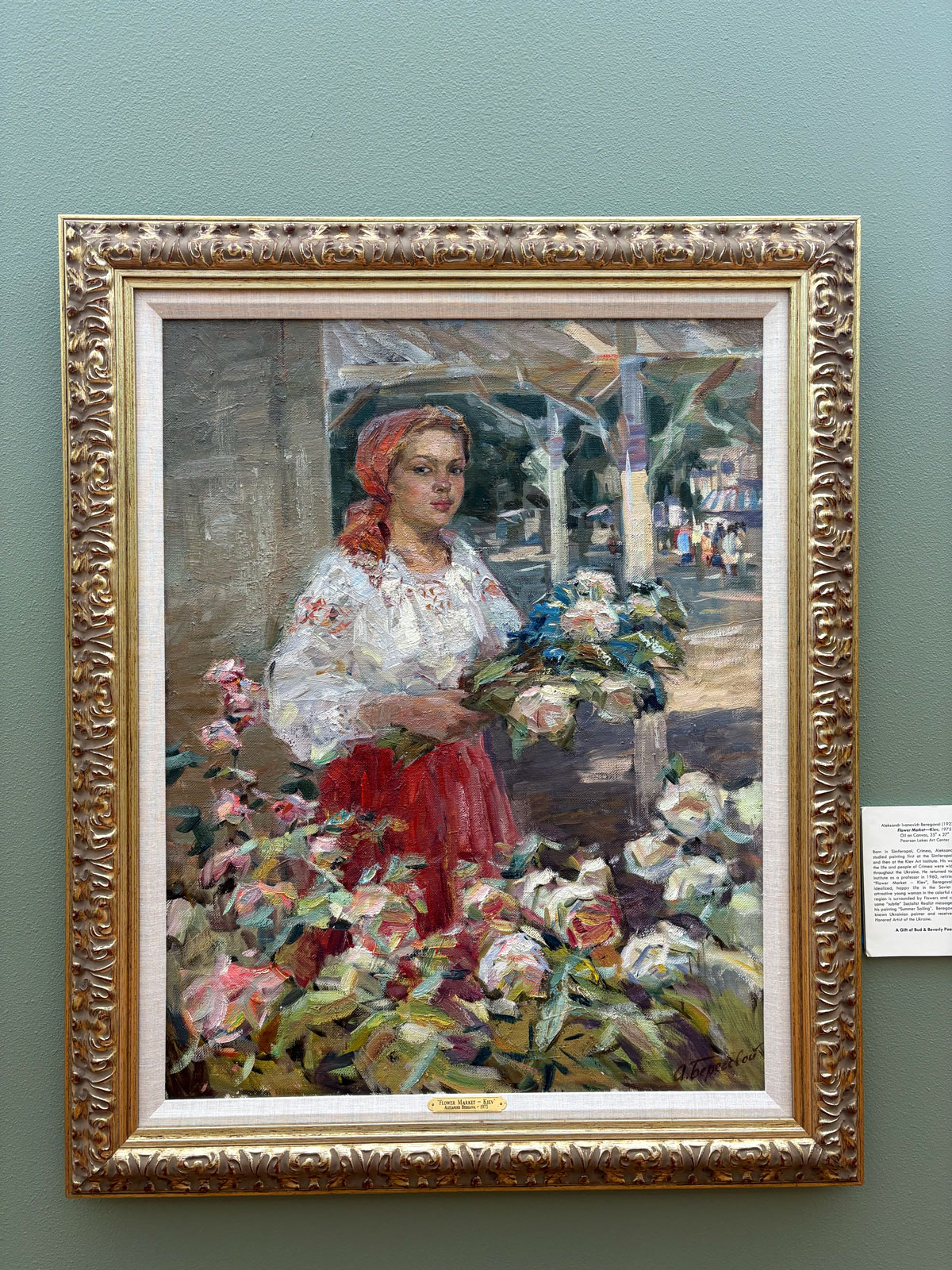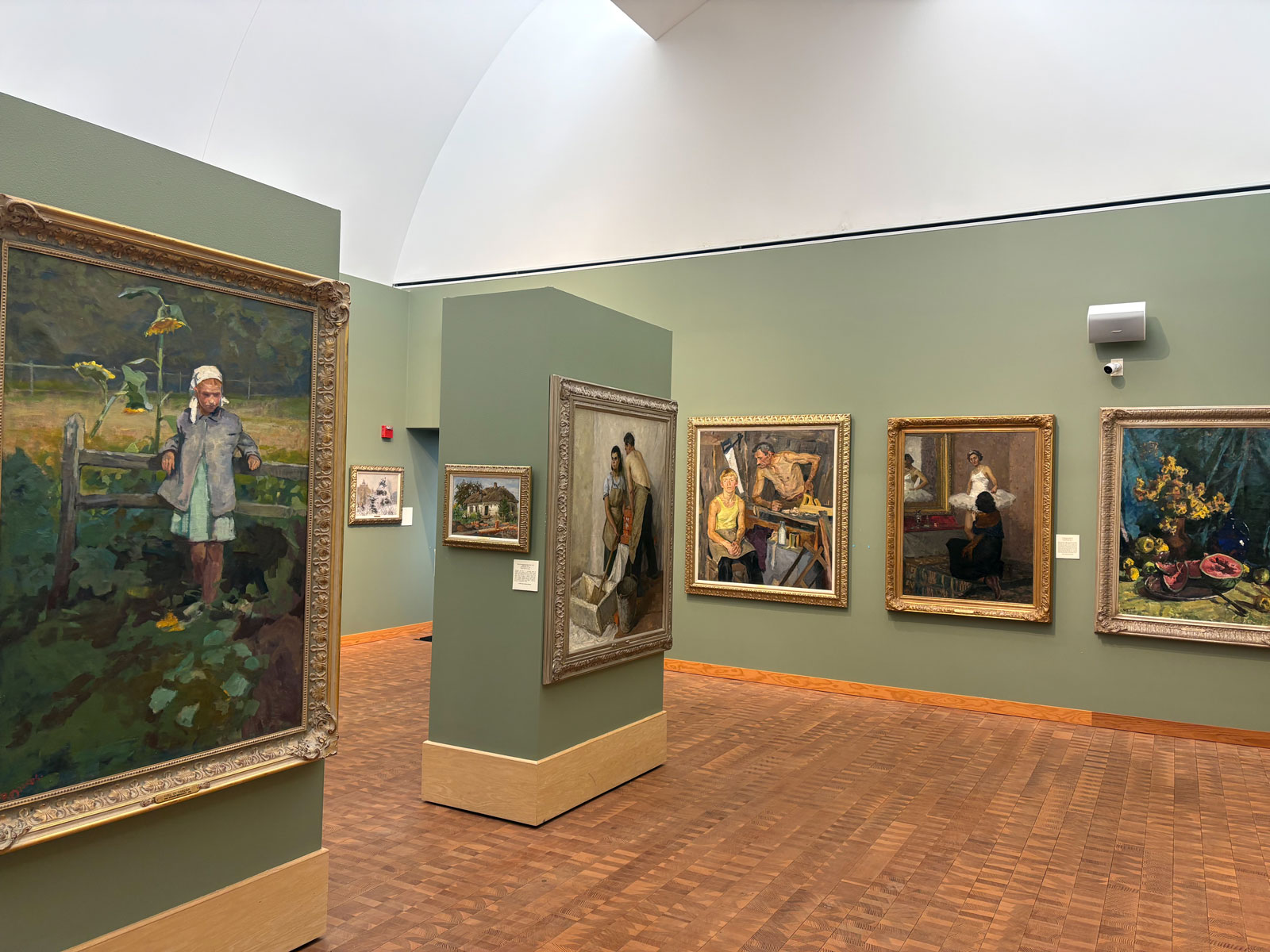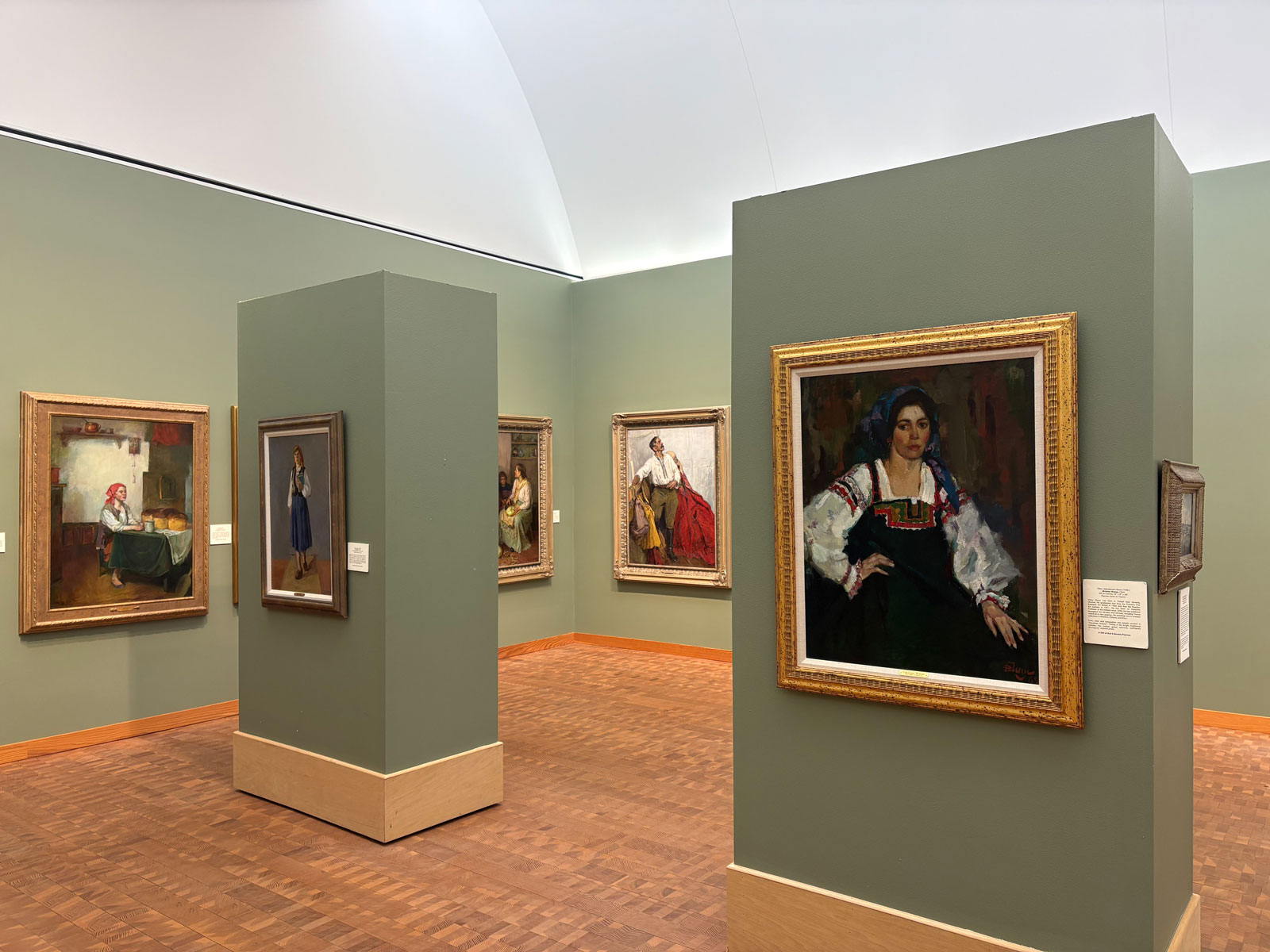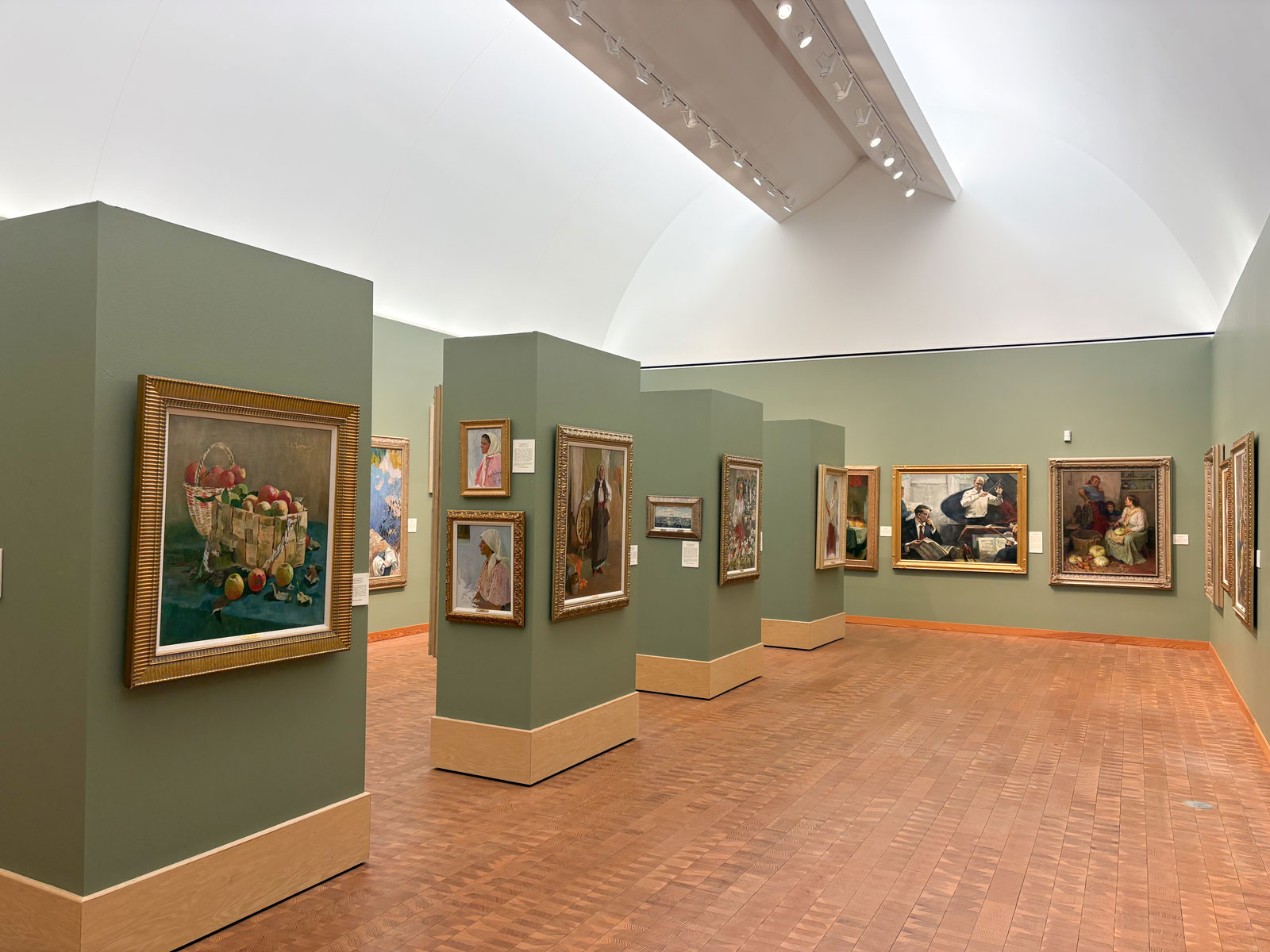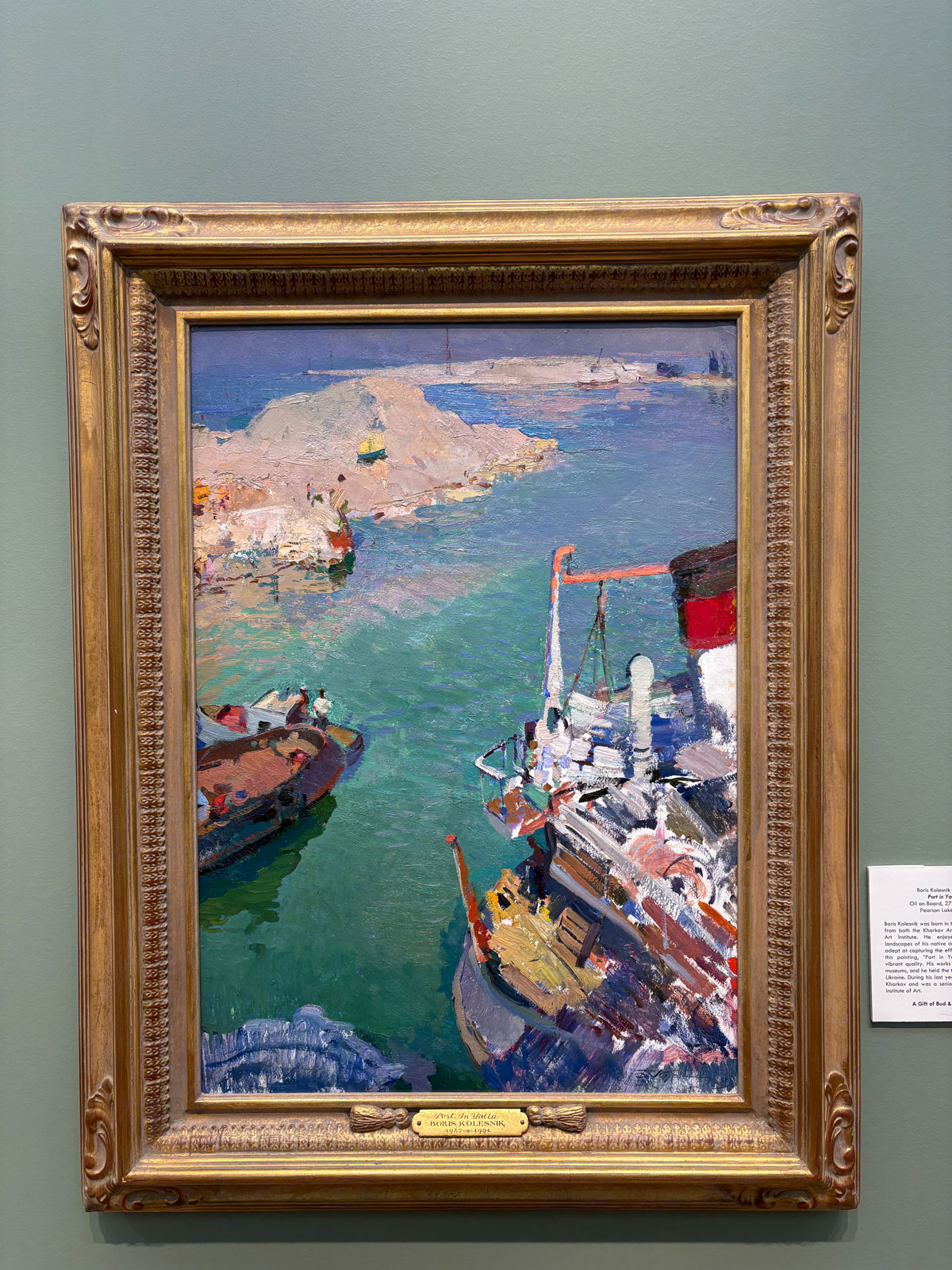

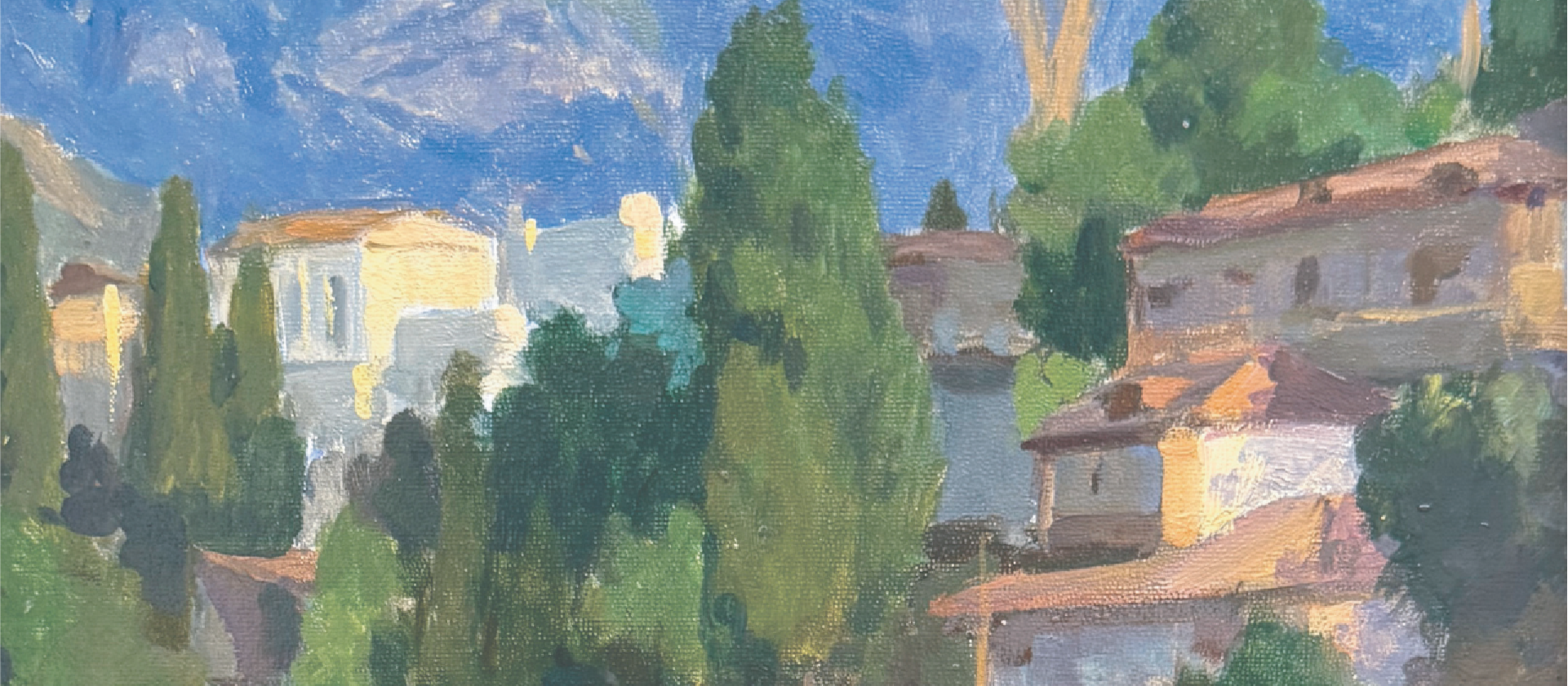
From 1917 until the collapse of Communism in 1991, the art of the Soviet Union was hidden from the outside world. In 2007, we were gifted with a 43-piece collection from this period, giving us a tantalizing look at the creative spirit that existed behind the Iron Curtain. This collection is housed in the Gerald Bud and Bev Pearson gallery and has been made possible through the gifts of Bud & Beverly Pearson and the Pearson Art Foundation, and John & Karen Goodenow.
A COLLECTION FOUND BY CHANCE.
Every museum collection has a story. Some are assembled through decades of careful planning, while others come together through remarkable twists of fate. The Soviet Art Collection at the Pearson Lakes Art Center is the result of extraordinary coincidence, lasting friendships, and a shared belief that exceptional art should be preserved and shared with the public.
The story began in 1992 when Bud and Bev Pearson were traveling through Scotland. While playing golf at the renowned Loch Lomond Golf Club, Bud asked the club’s manager, Scott Eubanks, if there was a place nearby where he could see some art. Instead of recommending a gallery, Eubanks invited the Pearsons to his home for dinner.
When they arrived, Bud noticed the walls were bare. Curious, he asked where the artwork was. Eubanks led him to a bedroom, reached beneath the bed, and began pulling out rolled canvases. One after another, he revealed paintings by Soviet artists.
For Bud, the discovery was unforgettable. Having traveled to Moscow twenty-five years earlier, he immediately recognized the people and scenes depicted in the paintings. The works resonated with memories of his visit, and before the evening ended, he had purchased every Soviet painting Eubanks had available.
By another extraordinary coincidence, Eubanks was preparing to return to his home in Scottsdale, Arizona, just a few miles from the Pearsons’ winter home. Over the next several years, whenever new shipments of paintings arrived from Russia, Bud was given the opportunity to view them first. What began as a chance encounter in Scotland gradually grew into an exceptional collection of forty paintings.
As the collection grew, Bud shared it with his friends, John and Karen Goodenow. During a visit to Scott Eubanks’ home in Scottsdale, Bud encouraged Karen to choose several paintings for her own collection. At the end of the evening, Bud made a simple request: he hoped that one day those paintings would also find their way to the Pearson Lakes Art Center.
The Goodenows never forgot that conversation.
In 2007, Bud donated his collection of forty Soviet paintings to the Pearson Lakes Art Center, creating one of the museum’s most distinctive permanent collections. Years later, in 2025, John and Karen honored Bud’s request by donating the paintings they had acquired, along with an additional work, adding eight more paintings to the collection and continuing the vision Bud had begun decades earlier.
Today, this collection stands as more than an extraordinary group of paintings. It is a testament to the unexpected paths through which art travels, the friendships that preserve it, and the generosity of those who believe it should be shared. What began with a chance conversation after a round of golf in Scotland has become a lasting gift for the Pearson Lakes Art Center and for generations of visitors.
RECONSIDERING SOVIET ART
This exhibition reflects the continuing re-evaluation of Soviet art that has taken place since the dissolution of the Soviet Union. For many years, limited access to Soviet collections led Western audiences to associate Soviet painting primarily with political propaganda and portraits of government leaders. As more artworks, archives, and scholarship have become available, a richer and more nuanced understanding of Soviet artistic production has emerged.
Although early twentieth-century Russia produced influential avant-garde artists such as El Lissitzky (1890–1941) and Kazimir Malevich (1878–1935), Socialist Realism became the dominant official style beginning in the 1930s. Soviet leaders, including Lenin and Stalin, favored the traditions of nineteenth-century academic realism exemplified by artists such as Ilya Repin (1844–1930). Artists were generally expected to create realistic works that celebrated Soviet ideals and portrayed workers, farmers, soldiers, scientists, and everyday life in ways that supported the state’s vision of society.
These political expectations shaped both subject matter and artistic practice. Yet within those constraints, many artists demonstrated remarkable technical skill, rigorous academic training, and a strong commitment to painting as a craft. Following Stalin’s death in 1953, artistic restrictions gradually eased, allowing greater experimentation with brushwork, color, and composition. Many later works reveal influences that parallel Impressionism and other painterly traditions while remaining rooted in realism.
Like art produced throughout history under governments, religions, and political systems, Soviet painting reflects the complex relationship between artistic expression and institutional power. While many works were created to support official ideology, they also document daily life, cultural values, regional landscapes, and individual perspectives. Today these paintings are appreciated not only as historical artifacts but also as significant artistic achievements that offer insight into a pivotal period of the twentieth century.
This exhibition invites viewers to consider Soviet art in its full historical and artistic context—recognizing both the political circumstances under which it was created and the exceptional abilities of the artists who made it.